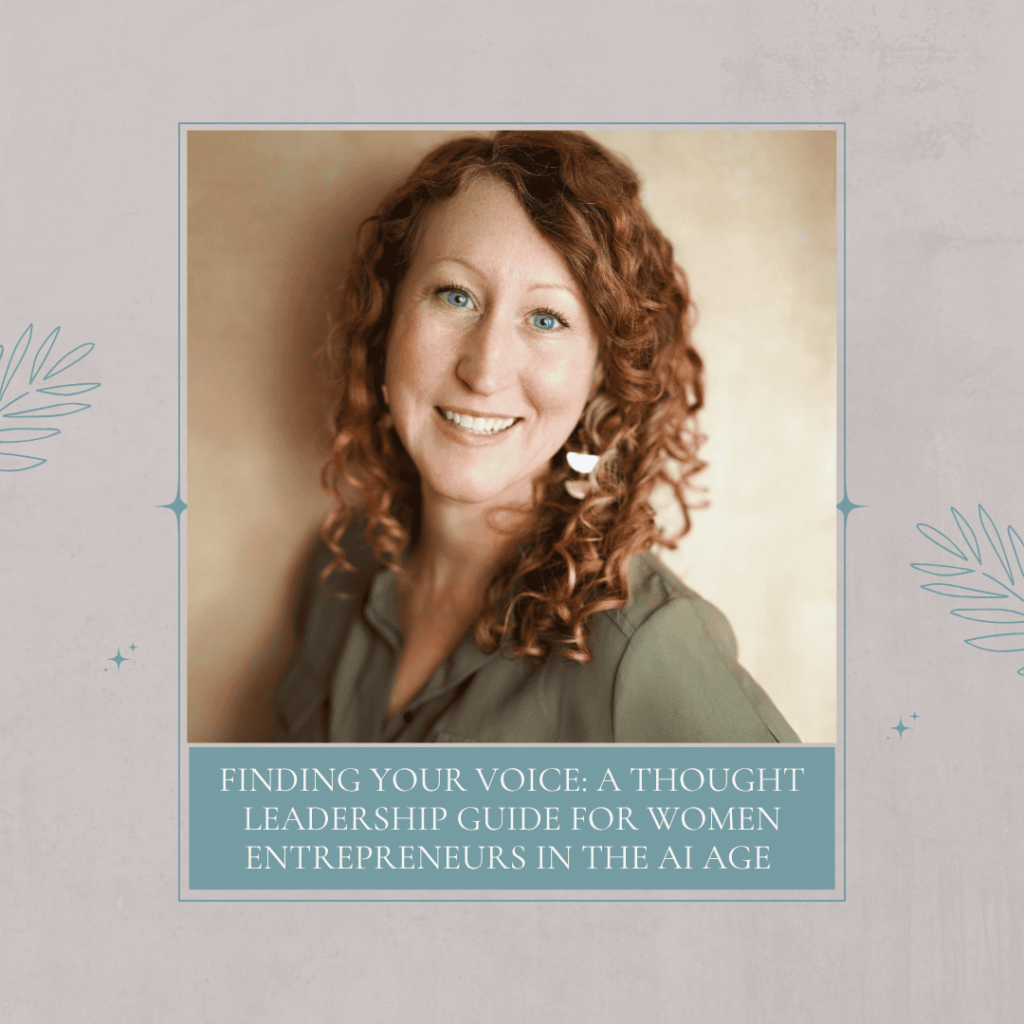
Guest Blog Post by member Carly Chomer, founder of Emanate Communications
AI has officially changed the way we consume content and information. For business owners, that means AI has equally changed the strategies we use to make our businesses findable.
Content has always played an important role in this process. Under the old ways, the more content you created for your website – using certain keywords and backend strategies – the better your chances of ranking through search channels. The new way, however, puts quality ahead of quantity, especially when it’s clear who it’s written for and that it’s speaking directly to their needs and pain points. It’s also best when
it’s part of an overarching content strategy.
For business owners – and especially for women solopreneurs – thought leadership content is also valuable in other ways. Building a consistent cadence of it can be a powerful tool for increasing confidence in your voice and expertise, especially when it feels authentic to you and those you serve. Long-form content, especially, increases credibility and authority and also provides easy opportunities for repurposing your insights into turnkey takeaways for social media.
But thought leadership is a place where a lot of us get stuck:
What do I write about? What’s the value of my voice, and why would someone care? How would my content stand out from others? When would I have time to do this and work?
If you’ve asked yourself any of these questions, you’re not alone, and we wanted to introduce a formula that can help you move out of stuckness:
Reflections +
AI +
Accountability =
Consistent cadence of authentic content. And this piece aims to help you get started.
https://herahub.com/resources/wp-content/uploads/sites/13/2026/08/emanate.png
Reflection: Defining your authentic brand voice
My work at
Emanate Communications is grounded in the belief that your unique brand voice sits at the heart of: your expertise, your values, and an understanding of who your audience is and how they value you.
- Your expertise – The depth and breadth of the work you’ve done up to this point, the services and products you’ve built, and the particular ways in which you do your work.
- Your values – The values and truths you have around the work you do and how you do it, including why it matters, can set you apart in a crowded industry. What are the pain points calling you into service, and how do you want people to experience your work or solutions? Your values and truths will generally stay consistent even as your audience’s needs change and evolve.
- Your audience – A clear understanding of who your audience is, where they’re struggling, and how your work speaks to their needs. The needs and challenges of your audience are changing rapidly, especially as AI evolves, so it’s critical to spend time digging deep and checking your assumptions.
Audience clarity is often where we get stuck
A really clear understanding of who your audience is, where they are, and what they struggle with is one of the greatest challenges that a lot of business owners and entrepreneurs struggle with. The upside is that once you get clarity, you gain some of the most powerful and defining insights that can shape how and where you spend your time.
Most of us have a good, general understanding of who we serve. But the more we’re able to narrow down core demographics, we can develop insights that refine important elements of how we work, including what services we offer and where we spend our time marketing and promoting our work. Consider:
- What are their job titles?
- Who are the key decision makers who will ultimately purchase your services?
- Where are they located?
- Do they reside in certain industries?
- Where do they spend their time?
- What are the pains points they experience in doing their job or living their lives?
- How do your services make their work easier or their lives better?
If you’re stuck on any of these questions, it’s time to do some research. AI can be a tool to help you dig deeper, but informational interviews on your own or through a third party are unmatched opportunities to get insights that can reshape everything, including the channels and language you use to reach them.
This also isn’t a one-time exercise. Your actual audience may drift from the one in our original business plan, but they’re also constantly evolving and you want to make sure you’re providing solutions that meet their needs today.
Decide how you want people to feel
As you reflect on your audience’s needs and your brand voice, think about the experience you want someone to have as they read your content or use your resources, including how you want them to feel. Here are a few examples of brand feelings:
- Empowered
- Energized
- Ambitious
- Limitless
- Safe
- Certain
- Appreciated
- Calm
- Joyful
- Distinguished
In
our brand development work, feelings play a central role and often dictate the colors, imagery, tone and language we use for your visual identity and brand narrative, but it’s the same for your content.
Generating content topics without and then with AI
Once you have your brand voice and audience in place, generating relevant content ideas can start to get easier.
Content ideation – without AI – starts with digging into two areas
Based on what you know from clients and audience conversations, start generating a list of topic ideas based on these two questions:
- What information is your audience asking for? – Where are the greatest gaps in information? What are their greatest pain points? What are some of the most common topics you’re speaking to? If you have multiple audiences, focus on one at a time. You can also start with your service areas and ideate on topic or pain points from this perspective.
- What topics drive you forward? – There are certain conversations and topics that revolve around your truths. There are reasons why you do your work that inspire you, otherwise you wouldn’t have taken this path. What are the conversations and topics that get you excited and stir something in you? These may not be on someone else’s radar, but you may see them as emerging trends or important topics to cover.
Both belong in the mix. The first builds trust; the second builds a point of view.
Content ideation that uses AI as an assist
Once you’ve done your human ideation, call in AI for support. We’d suggest, however, that you bring in your reflections from above. Your chosen AI platform may have insights into your why and know your audience, but this can be a helpful exercise to bring things back into alignment.
Start with this prompt:
Using these reflections on my why, audience, brand feelings, and core services, generate a list of content topic ideas that align with my audience’s needs and service areas.
Map out your findings and especially the ideas that resonate with you, perhaps by service or primary topics. You can also ask AI to do some further digging and ideating based on the results you’ve been given.
Next, try this as a follow-up:
Give me a list of industry cycles, seasonal trends, holidays, and awareness months relevant to and .
This information together will give you a starting point for an editorial calendar. Consider mapping out content topics in a way that aligns with relevant themes or holidays. For example, if strategic planning is one of your core service areas, there may be times of year where organizations are thinking about being more intentional.
Building a cadence you can keep
Your editorial calendar also takes into consideration the goals you have for producing content. What’s realistic for you?
It may be that you can manage one long-form piece a month that becomes your tool for repurposed content you can use throughout the month. There might also be accountability and support structures that you build in to support this process.
For example, I write thought leadership on behalf of or in partnership with clients, which means my own content has to fit in the margins. So I tie it to a commitment I’ve already made: one newsletter a month, and because I don’t want that newsletter to be purely promotional, I include a blog post or informational resource.
We also offer a
thought leadership accountability program that can provide different levels of support and accountability based on what you need.
Ensuring your content looks and feels human
For many of us, AI is both an idea generator and a doer – and it can provide a helpful tool in the content creation process. So, where do we draw the line between AI-generated and human-generated content?
Really, it’s your call, but keep in mind that your buyers are humans and not AI. Findability is important but even AI will be checking for an original voice.
Make sure your original thoughts are together:
- What’s the why behind your piece? Is there a time relevant hook, and/or why should someone care about this issue or topic?
- What are the greatest pain points, gaps in knowledge, or struggles people face around this issue?
- What are your solutions or what approaches would you recommend? Consider breaking things down into number lists, bullets or FAQs, etc.
- What’s the most important conclusion?
Once you have your thoughts down, you could use AI to:
- Give you ideas for how to tease it apart
- Draft a narrative for you
- Edit your final draft
The most important part is that it looks and feels authentic and it’s in line with the voice and tone of your brand. Remember that – where AI is omnipresent – quality is more important than quantity.
The bottom line
The conversation about AI and findability is a real one, and it’s worth having. But building your thought leadership starts with connecting into your authentic voice, and then creating credible resources that are clear and speak to the needs of those who value your work. Let AI be that tool that simply makes it easier to get out of your own way.
https://herahub.com/resources/wp-content/uploads/sites/13/2026/08/celebrating-the-power-of-women-supporting-women-1.png
Carly Chomer is the founder of
Emanate Communications, where she helps women entrepreneurs, leaders, and purpose-driven organizations develop an authentic brand voice and define where and how they share it. She’s a Hera Hub guru, offering free one-on-one sessions on thought leadership and brand voice – open to members and non-members alike. You can book time through
Hera Hub’s guru program.
Connect with Carly
LinkedIn:
https://www.linkedin.com/in/carlychomer
Website:
emanate-communications.com